The ayurvedic treatment for irritable bowel syndrome (iBS)
how i healed IBS and digestive issues naturally
a comprehensive guide
to managing IBS and digestive issues naturally with ayurveda.
In this guide, I share how Ayurveda, a natural healing system, transformed my life from chronic IBS and severe digestive issues to better health and well-being. Through the Ayurvedic diet, its philosophies, and holistic practices, I was able to reclaim both my physical and mental health.
My hope is that the insights in this guide offer you the support you need to take back control of your digestive health and live a more balanced life.

my personal experience with IBS
the constant struggle of chronic symptoms
It was three years into my journey of trying to heal my crippling digestive issues. I had been to countless doctors. Tried every natural remedy under the sun. And had exhausted nearly every option. Still, I had no answers.
Once again, I found myself sitting in another doctor’s waiting room, nervously optimistic. “This will be the one,” I told myself. “This doctor will finally have the answer.”
As I sat in silence, the weight of my repeated disappointments settled in. How many times had I been through this same process of getting my hopes up only to be let down again?
“Frau Heikens,” the receptionist’s voice snapped me out of my thoughts, sending a familiar wave of anxiety through my body. “The doctor will see you now.”
I walked into the doctor’s office, armed with my folder of test results, doctor’s notes, prescriptions — a medical history that spanned years, but still only told part of the story of what I had been through.
Once again, I shared my well-rehearsed summary of symptoms:
“For three years I have struggled with digestive issues – bloating, gas, constipation, diarrhea, abdominal pain, nausea and cramping. I also experience regular headaches, hormonal imbalances, anxiety, depression, chronic fatigue, fungal infections all over my body, malnutrition, and I haven’t had my period in two years.”
Even now, writing it down feels surreal. It is hard to believe that this was my life for more than three long years.
The doctor ordered a colonoscopy and endoscopy — essentially sending a tiny camera into my digestive tract and bowels. They are pretty uncomfortable procedures, but were the last resort I hadn’t yet tried.
A few days later, I received a call and was diagnosed with severe Irritable Bowel Syndrome (IBS), which, in many ways, is doctor-speak for, “We don’t really know what is wrong with you.”
When my search for an answer reached an unsatisfying end, a new journey was about to unfold:
My journey of freeing myself from IBS and reclaiming my health and well-being.
If you are reading this, I have a feeling my IBS journey sounds all too familiar.
You might be dealing with IBS, digestive issues, or another chronic condition.
Just like me, you have likely tried it all – doctors, specialists, diets, cleanses, naturopaths, and every “health hack” you could find. Spending countless hours in waiting rooms, researching online, talking to others, listening to podcasts, and shedding many tears out of sheer frustration and helplessness.
I have been there, too.
I want you to know that I deeply empathise with you, and more importantly, I want you to know there is hope. You can free yourself from IBS and digestive issues naturally. I know because I have done it and, in this article, I will share all the details of how Ayurveda led me to reclaim my health.
does ayurveda really work?
what to expect when following ayurvedic principles
After years of disappointment on my own IBS journey, I had abandoned the hope of finding a treatment for my so-called “incurable condition” and believed to be destined to a life of symptom management.
But in 2020, I stumbled upon a podcast interview with Myra Lewin, a Yoga and Ayurveda teacher. She spoke about Ayurveda and how its principles can enhance the body, mind, and spirit connection to heal illness naturally. The way she described living in alignment with these principles – finding balance and peace – resonated deeply with me, even though I was initially resistant to all the dos and don’ts.
Ayurveda just made sense. All the puzzle pieces of my poor health at the time seemed to fall into place.
I went deep into the ancient wisdom of Ayurveda, learning with a renowned teacher, immersing myself in books, and studying to become an Ayurvedic Health Advisor.
As I applied the teachings in my own life, my IBS symptoms started fading away.
My well-rehearsed summary of digestive symptoms – balloon-like distension, constant variation of constipation and diarrhea, and ongoing abdominal discomfort – transformed completely.
I was back to having regular and firm bowel movements, more ease in my abdomen, consistent appetite, and perhaps most satisfying of all, the return of my belly to its natural, non-bloated shape.
I slept through the night again, my fungal infections reduced, and my headaches vanished completely. Even my menstrual cycle returned after following an Ayurvedic lifestyle for a prolonged time.
Putting this incredible transformation into words still feels surreal.
It makes me wonder why so many people with IBS are told that symptom management is their only option.

the difference between IBS and irritable bowel disease (IBD)
symptoms, causes, and treatment approaches
IBS and IBD are often confused because they are both chronic gastrointestinal disorders with similar symptoms. But, the way they impact the body, and the specific areas of the digestive tract they affect, are notably different.
IBD refers to chronic inflammatory disorders of the innermost layer of the gastrointestinal tract, often resulting in severe irritation and tissue damage. Symptoms include uncontrolled diarrhea, rectal bleeding, weight loss, abdominal pain, fever, and malnutrition. The most common forms of IBD are Crohn’s disease and ulcerative colitis.
According to Western medicine, IBD is considered a lifelong disorder with no known cure, and its underlying causes remain an area of ongoing research.
IBS, on the other hand, is characterised by abdominal pain, gastrointestinal discomfort, altered bowel habits, such as diarrhea and constipation, along with sensations of bloating and distension.
IBS has become one of the most commonly diagnosed gastrointestinal disorders worldwide.
Like so many women, I experienced a number of these symptoms alongside other conditions – chronic fatigue syndrome, fibromyalgia, amenorrhoea, and mycosis – without a clear underlying disease.
Dr. Robynne Chutkan, an integrative gastroenterologist, describes IBS as a “catch-all diagnosis that offers limited insight into the underlying causes of the problems”, making it difficult to treat or cure. This is why many of us, myself included, have been dismissed by doctors and told that our symptoms are stress-related or “all in our heads,” with the recommendation to try the Low-FODMAP diet.
Fortunately, there is now a growing number of people seeking lasting solutions to digestive issues and ways to naturally manage or even cure IBS, and in some cases, IBD.
Driven by years of persistent disappointment on my healing journey, I am now writing this article to share with you how I healed my IBS with Ayurveda — a path to reclaiming a sense of well-being without allowing symptoms to dominate my life or define who I am.
Before we dive into the details, I want to be completely transparent:
While I have healed my IBS, it is not that I never experience minor gut issues. But my symptoms and quality of life have improved so dramatically to the point I no longer define myself a “person with IBS”.
Each of us is unique, and what works for me may not work in the same way for everyone. However, I can affirm that many women have followed a similar path and achieved life-changing results.
what is ayurveda?
The Holistic Healing System for physical, mental, and emotional well-being
Ayurveda is one of the oldest and most renowned traditional systems of medicine. It means “the wisdom and science of life” and offers a holistic approach to health and well-being. Though Ayurveda originated in India over 5,000 years ago, it is now accepted and practised worldwide.
Instead of relying on prescription drugs to manage symptoms, Ayurveda utilises natural tools and holistic practices from ancient massages and herbal treatments to dietary and lifestyle habits. The focus is to cleanse the body of toxins, strengthen the immune system, and heal the root cause of illness, including conditions like IBS.
Unlike Western medicine, which often views IBS as an incurable condition to manage, Ayurveda understands it as something that can be healed. It offers a path to overcoming digestive issues by addressing the deeper imbalances in the body.
Although Ayurveda may seem outdated or “out there,” remember that if what you have tried so far hasn’t worked, you wouldn’t be here searching for another way.
And if you have already explored Ayurvedic principles to manage your digestive issues without success, don’t give up just yet. The insights I am about to share could offer the transformative breakthrough you have been looking for.
the 3 foundations of ayurveda
What Is The Root Cause Of IBS According to Ayurveda?
The Ayurvedic approach to healing IBS and improving digestion is rooted in three key principles:
agni (digestive fire),
āma (toxins),
and the doshas (unique balance of the five natural elements).
These principles are directly connected to the symptoms of IBS and other digestive disorders, explaining how various symptoms and health conditions develop over time.
By understanding these concepts, you can reverse the disease process of IBS and restore your gut health naturally.
These Ayurvedic concepts can seem overwhelming at first. But really, they speak to things we intuitively know – what we consume, how we process it, and the flow of energy in our body and mind all influence our well-being. When one or more of these factors is out of balance, illness can arise. But by restoring balance, we can also restore our health.

IBS caused by toxicity
What are toxins (ama) in ayurveda?
Āma refers to toxins that build up in the body from undigested food-matter, chemicals, toxic molecules, environmental toxins, and unprocessed emotions.
We are all exposed to toxins in varying degrees, but when they accumulate in your body, they disrupt your natural self-regulatory mechanism, also known as self-healing.
From an Ayurvedic perspective, āma can accumulate in the gut, initially causing minor digestive issues. Over time, it can spread into the deeper tissues, where it blocks the flow of nutrients and energy – the manifestation of more severe symptoms and eventually the development of IBS.
I experienced many signs of āma accumulation, such as pain, fatigue, poor digestion, irritated skin, mood swings, hormonal imbalances, and brain fog. My unhealthy eating habits and high-stress lifestyle, combined with unresolved emotions, had all contributed to toxin buildup in my body.
From an Ayurvedic perspective, clearing these toxins is key to healing IBS and restoring your digestion and natural balance.
IBS caused by weak digestion
how your digestive fire (agni) shapes your health
Agni, or digestive fire, is your ability to process everything you take in through your senses of taste, touch, smell, sound, and sight: food and beverages, skincare products, what you watch, your interactions, and daily experiences.
It is essentially about how well you process, or “digest”, life. The Ayurvedic texts state that your ability to digest life is directly related to your ability to digest food, and vice versa – it is all connected.
Agni governs your microbiome, digestive functions, and energy levels. When it is strong, digestion runs smoothly, and you feel energised, balanced, and well.
Reflecting on symptom-free times in my life, I can see the signs of strong agni – easy and regular elimination, glowing skin, strong immunity, and a deep sense of confidence, courage, joy, and contentment. But as my digestive fire weakened, IBS symptoms took hold.
High levels of āma can suppress your digestive fire, and disturbances in agni cause toxins to accumulate even further. The result is a weakened ability to process food, emotions, and life experiences, leading to gastrointestinal discomfort and common IBS symptoms like diarrhea, constipation and bloating, among many others.
Therefore, the Ayurvedic approach to managing IBS focuses on reigniting agni to support healthy digestion and eliminate toxins, which is essential for restoring health.
IBS caused by dosha imbalances
how to balance the three ayurvedic body types
Āma buildup and agni disturbances are often caused by imbalances in the doshas.
What are the doshas?
According to Ayurveda, everything in nature, including you and I, is composed of five elements – ether, air, fire, water, and earth. These elements combine to form the three doshas of vata (air and ether), pitta (fire and water), and kapha (water and earth).
The doshas are a way of describing how the elements shape your physical body, emotions, tendencies, unique characteristics, mental state, and susceptibility to illness. They govern all fundamental functions of your physical, mental, and emotional health.
You were born with a unique combination of all three doshas, which represents your balanced state of health and well-being. It is as unique to you as your fingerprints but also susceptible to imbalance from various influences such as lifestyle, diet, environment, and even the people around you.
An excess of vata and pitta doshas is often behind IBS symptoms, which was exactly my case. The vata imbalance manifested as restlessness, fatigue, exhaustion, hypersensitivity, dry skin, constipation, bloating, gas, and insomnia. Excess pitta caused symptoms of diarrhea, overheating, irritability, anger, frustration, inflammation, intense hunger and hangryness.
Once I understood this concept and recognised my imbalances, I was able to implement the right Ayurvedic practices, dietary changes, and lifestyle adjustments to remove toxins, ease my symptoms, and heal my IBS.
the right diet for IBS and gut health
Foods to Eat and What to Limit
Ayurveda has a simple, powerful saying: “If your diet is poor, medicine will be of no use. If your diet is good, there is no need for medicine.”
If you are like me, you have probably tried countless diets to alleviate IBS. The Low-FODMAP approach, a widely known tool for managing irritable bowel syndrome, focuses on reducing specific carbohydrates that are hard to digest.
However, for me, like many others, this and other diets did not resolve my symptoms.
I experimented with elimination diets, high-fibre foods, veganism, ketogenic, paleolithic, and various rounds of fasting, but none of these modern approaches worked.
What I discovered through Ayurveda is that a healthy diet goes beyond food groups or nutrient counts – it is about simplicity and balance.
“I see so many people obsessing over the right diet,” one of my teachers said, “when really, they are going to find the answer in simplicity.”
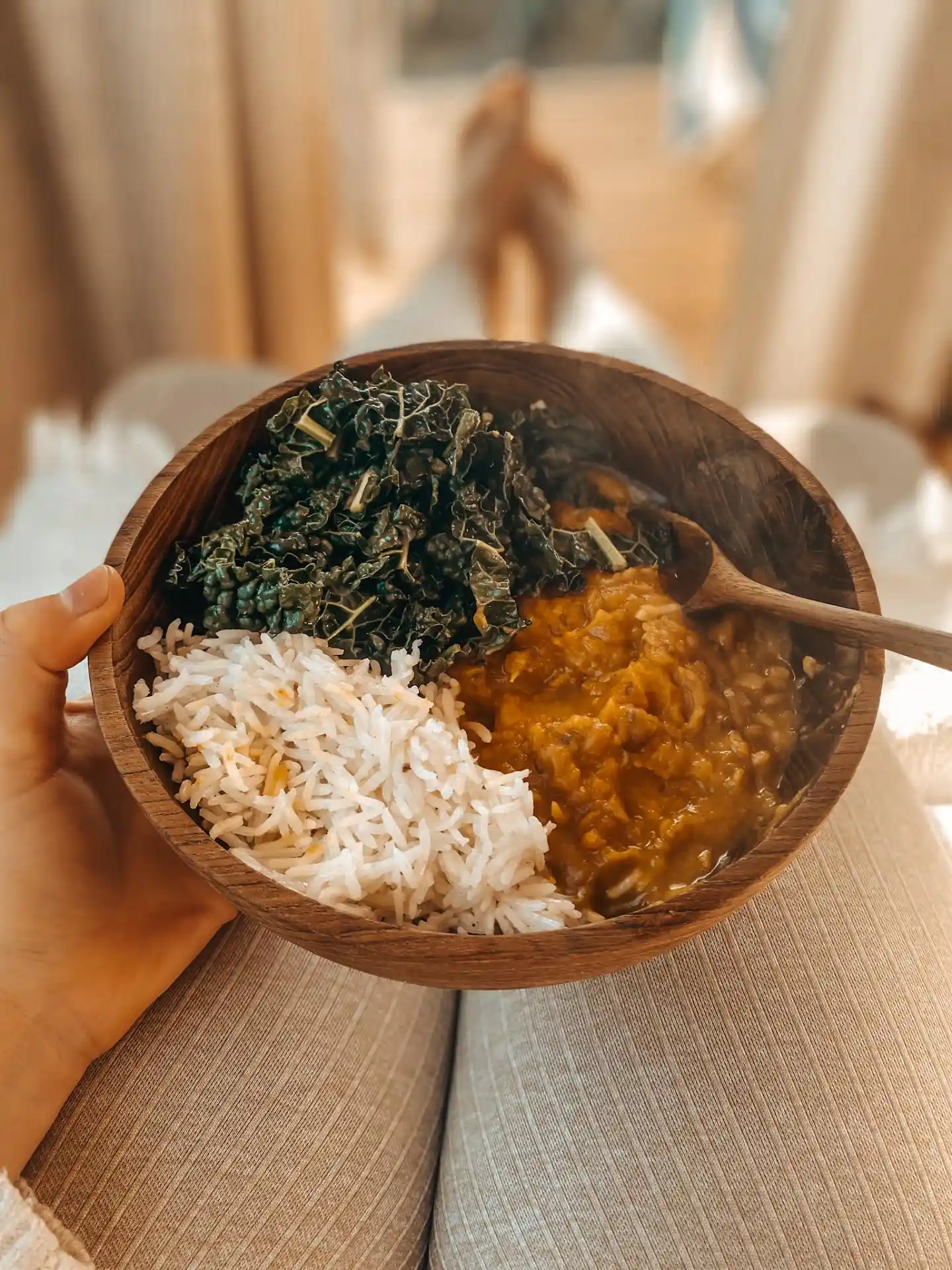
To maintain this simplicity, Ayurvedic cooking revolves around a simple concept: Build each meal with a balance of 60% augmenting foods – grains and vegetables that nourish the body – alongside 40% extractive foods, such as legumes and vegetables that cleanse the body.
Instead of following restrictive lists, I adopted this approach and completely changed my relationship with food. Simplifying my meals was one of the key aspects of restoring my gut health and healing IBS.
Below is a breakdown of what these foods are and why they are essential to balancing digestion.

what are augmenting foods?
Augmenting foods are nourishing and grounding, support tissue growth, and replenish and enhance vitality and energy levels. They are the sweeter tasting foods that grow close to or under the ground. Think of rice, oats, sweet potatoes, beets, and pumpkins.
When I think of augmenting foods, I imagine a warm bowl of pumpkin soup with homemade flatbread on a chilly autumn evening – nourishing, comforting, and grounding.
However, while these foods are rich and satisfying, they lack the detoxifying properties necessary to support healthy digestion. That is why you also need extractive foods on your plate.
what are extractive foods?
Extractive foods are the cleansing and detoxifying counterpart to augmenting foods. They help remove toxins (āma), break down healthy fats, and improve nutrient absorption. These foods stimulate the production of digestive enzymes and promote bile flow, making digestion smoother and more efficient.
Extractive foods typically have a bitter or astringent taste, such as leafy greens, cruciferous vegetables, and legumes like soy, adzuki beans, or peas. Many herbs, including fresh parsley, are also wonderful additions to meals because of their extractive properties.
By combining 60% augmenting foods with 40% extractive foods in most of my meals, I was able to create a balance that was gentle on my digestion and essential for healing my IBS.

how i applied the ayurvedic diet for IBS
Reintroducing Foods and the Importance of Simplicity for gut health
At first, I adopted this principle by increasing the amount of grains and sweeter vegetables compared to legumes and bitter vegetables in my meals. If I wanted to include meat, I replaced legumes with it, while also adding healthy oils and spices – keeping everything as simple as possible.
One of my go-to meals was white basmati rice and carrots (60% augmenting foods), combined with yellow mung beans and spinach (40% extractive foods). This simple, balanced combination is easy to digest and helped me build a foundation for restoring my gut health.
Ayurveda’s emphasis on organic, locally-sourced, and clean foods has also been crucial in my healing process. Food is medicine in Ayurveda, which is why it is important to prioritise fresh, chemical-free ingredients while avoiding processed foods and GMOs as best as you can.
After many months of following these guidelines more strictly, I began slowly reintroducing other foods, carefully observing how my body responded. I started rotating through different augmenting and extractive foods depending on the season and availability, while gradually adding sides like avocado, buttermilk, chutneys, and chapati.
If you’re interested in a free chart with ideas for complementary sides to add to your meals, click this link.
There is much more to Ayurvedic eating than I can cover here, but if you are curious about how to apply these principles to your own situation, I invite you to reach out to me or another trusted Ayurvedic practitioner of your choice. Together, we can find the right approach to support your unique digestive needs and restore balance to your life.
the best ayurvedic oils
how can oils support IBS management and gut Health?
I used to avoid oils, worried about their association with high cholesterol, weight gain, and increased blood pressure. But despite their negative reputation in modern diets, oils are at the heart of the Ayurvedic tradition and are vital for natural healing.
According to Ayurveda, most IBS symptoms indicate internal dryness. This makes sense when you consider the dosha imbalances most commonly associated with IBS – excess vata and pitta.
Vata, representing the air and ether elements, is characterised by dryness, roughness, coldness, and airiness, leading to symptoms like bloating, gas, constipation, and gut sensitivity. Pitta, embodying fire and water, manifests as heat and sharpness, resulting in internal inflammation, acidity, and diarrhea.
Wholesome oils – think organic, raw, and unrefined – are essential for nourishing the body. They aid in the absorption of vitamins and minerals, lubricate the digestive system, support the nervous system, and play key roles in functions such as blood clotting, muscle function, and immune support.
High-quality oils are also detoxifying, helping to cleanse the body of accumulated āma (toxins), which is crucial for maintaining gut health and reversing IBS.
When I began incorporating oils into my cooking and practising regular oil massages, my digestion improved significantly because it was given the right amount of lubrication to counter my internal dryness. My digestion became smoother, less sensitive, and the pain I used to feel completely disappeared.

how to choose the right ayurvedic oil for your dosha
The most important thing to know is that each oil carries specific qualities, such as warming, cooling, anti-inflammatory, or cleansing. You can choose your oil based on the dosha imbalance – vata, pitta, or kapha – you are experiencing.
If you don’t know your predominant dosha(s) and current imbalances, you can read my free article to guide you through this.
The oil you select should have the opposite qualities of the imbalances you are experiencing – this aligns with the Ayurvedic philosophy that “like increases like, and the opposite brings balance“. This applies to both cooking oils and oils used for topical treatments.
Here is how to choose the right oil based on your dosha imbalance:
It is recommended to include 1–2 tablespoons of unrefined, natural oils, free from harmful additives, in your cooking daily. You can also practice Abhyanga, an Ayurvedic self-massage using oils, to support overall health and lubrication.
how can spices support IBS management?
the correct use of spices to naturally support digestive health
Spices hold incredible value in Ayurveda and have made a profound difference in my digestion. Their potent antioxidant, anti-inflammatory, and healing properties are now widely studied for their ability to fight inflammation, support gut health, and even reduce the risk of cancer.
Spices are also powerful digestive aids, which helped me alleviate many unpleasant IBS symptoms. And, of course, they enhance the flavour of every meal.
According to Ayurveda, each spice has unique qualities and is linked to one or more of the five tastes of sweet, sour, bitter, pungent and astringent. It is said that optimal digestion requires incorporating all five tastes into your meals. This not only adds more balance to your plate, but is also supports the healing process of the digestive tract.
Instead of overwhelming myself with the tastes and qualities of different spices, I adopted a practical approach of integrating 3-5 spices into each dish, using moderate amounts.
my favourite Ayurvedic Spice Blends for Digestive support
Through experimentation, I have created a few delicious spice blends that not only soothe digestion but continue to form the basis of my daily cooking routine. If you are new to using spices for healing, I recommend starting with simplicity and building an adaptable foundation.
Here are some of my favourite spice blends that you can easily try at home:
combination 1 – All-purpose Digestive Blend
(my absolute favourite)
Combination 2 – Anti-Inflammatory
(ideal to cool down an irritated digestive fire)
Combination 3 – Digestive Boost
(warming and great when constipated)
the ultimate detox for ibs
Restoring Digestive Health with the Ayurvedic Kitchari Cleanse
Ayurveda emphasises that even the healthiest, freshest, most organic, and nutrient-rich diet can only achieve so much if your digestive system is already compromised by accumulated toxins (āma), a weakened digestive fire (agni), and dosha imbalance. As we explored earlier, these imbalances lie at the root of many IBS symptoms.
That is why detoxification is a foundational practice in Ayurveda. The ancient sages regarded cleansing as a sacred journey towards health, balance, and longevity because it allows the body to naturally heal from within by clearing out toxins.
“We simply need to get out of our own way and allow our bodies to do what they do best,” one of my teachers often said.
An easy way to pursue an Ayurvedic cleanse at home without starving yourself through a fast is by doing a kitchari cleanse – a meal consisting of rice, split mung beans, vegetables (optional), digestive spices, and ghee. This gentle cleanse is designed to restore balance, soothe digestion, and give your gut a chance to reset.

what makes kitchari so special?
My first kitchari cleanse was a breakthrough in my IBS healing journey. It was like hitting the reset button on my digestive system, giving it a much-needed break. My symptoms disappeared within a few days – a result that years of treatments and diets had failed to achieve.
Kitchari is a staple dish in Ayurvedic healing due to its simplicity, nourishment, and therapeutic properties. What makes it so effective for IBS and digestive health is its gentle nature, which soothes and supports the digestive system while providing all the essential nutrients your body needs.
In fact, Ayurveda says that kitchari alone can supply the necessary nutrients for a lifetime.
The combination of rice and mung beans is a complete protein source and filling, while spices like turmeric, cumin, and fennel enhance digestion and detoxification. Ghee, known for its lubricating and nourishing qualities, supports the removal of toxins (āma) and helps calm the digestive tract.
I still celebrate the healing effects of kitchari to this day, and it has become an integral part of my healing routine. Each week, I have a dedicated kitchari day, and with every change of season, I do a full 5-day cleanse to continue supporting my gut health and overall well-being.
how to do a kitchari cleanse at home
You can join me and a group of women for my seasonal guided 5-day kitchari cleanse, where I walk with you through the process step by step, providing Ayurvedic insights and daily practices to deepen your experience. Get in touch with me if you are interested.
Alternatively, follow my kitchari recipe to create your own Ayurvedic cleanse. During your cleanse, I recommend prioritising rest, hydration, and gentle movement like yoga or walking to support your body’s natural healing process.
Incorporating Ayurvedic self-care rituals, such as oil massage, can further enhance detoxification and healing.
If you would like more detailed guidance on Ayurvedic cooking, recipes, and lifestyle practices to support your cleanse, feel free to reach out to me for a personalised treatment plan.
the gut-brain axis through a holistic lens
how stress, anxiety, and depression impact IBS
Ayurveda is a holistic system of medicine that recognises your mental, emotional, and spiritual well-being as equally important to your physical health as what and how you eat. From my experience, healing IBS requires this full-spectrum approach.
The connection between the body, mind, and emotions has become an increasingly discussed topic. Researchers have even dubbed the digestive tract “the second brain” after discovering it contains as many nerve cells as the spinal cord.
Interestingly, IBS is often considered one of the most compelling examples of the connection between mental, emotional, and physical health. Studies show that distressing life events – ranging from break-ups and divorce to work-related stress, family conflicts, or illness – often trigger IBS flare-ups. If you are struggling with IBS or a similar chronic condition, I am sure you can relate to this.
Whenever I felt emotionally unsettled, my IBS symptoms would worsen significantly. Stress intensified my diarrhea, sadness triggered agonising migraines, and nervousness led to painful, uncontrollable bowel movements. Anger caused my body to tense so much that I could feel every movement in my digestive tract, and it was far from pleasant.

can Unprocessed Emotions and Trauma affect gut Health?
When emotions or trauma from distressing life events remain unresolved, they tend to become stored in the body – you have likely heard the phrase the body keeps the score.
Over time, these unprocessed emotions can accumulate and imprint deeply on both the body and mind, influencing thoughts, feelings, behaviours, and daily choices. Many people, including myself, believe that unresolved emotions, mental distress, and trauma eventually manifest as physical symptoms, contributing to chronic conditions like IBS.
Through my personal journey, I have come to understand that suppressed emotions, unhealed trauma, and ignored emotional pain were at the root of my mental, emotional, and physical imbalance – and directly related to my IBS.
Although this concept is still being explored by research, countless people have experienced profound healing once they allowed themselves to feel and express these difficult or long-held emotions.
6 Tools for Emotional Healing and Holistic IBS Management
Alongside lifestyle and dietary adjustments, I found that processing and healing my emotional wounds was the key to overcoming my IBS. Below are the Ayurvedic tools that helped me explore where I had stored unresolved experiences and how they connected to my digestive symptoms.
This process requires deep, ongoing commitment to healing, but it can be profoundly rewarding. Ayurveda offers many tools to guide you in releasing suppressed emotions that may be contributing to your IBS.
If you would like personalised guidance on a holistic, mind-body-spirit approach to healing IBS, feel free to get in touch.
Meditation – Reduces Stress and Anxiety in the Gut
Ayurveda, as a holistic approach to restoring balance to body, mind, emotions, and spirit, is meant to be practised together with its related sciences, which are all rooted in the broader teachings of the Vedas – the most sacred and ancient scriptures of Hinduism.
One of the most commonly known and most closely related sciences to Ayurveda is Yoga.
In the Western world, Yoga is usually understood as physical postures, or asanas. They are a great doorway into the practices, but Yoga goes far beyond bendy twists or nailing a headstand.
The quieter and deeper disciplines of meditation, pranayama (breathing exercises), and mantras are all part of the practices of Yoga, with meditation being one of the most effective to support the healing of IBS and similar health issues.
Research shows that anything that causes stress to the mind affects how the gut works. Anything that affects how the gut works affects how the mind works. Meditation helps to access and positively affect the gut-mind connection.
It reduces stress, anxiety, and inflammation, which affects the digestive system and can actually alter the genes that contribute to IBS – and this is without any adverse side effects.
A regular meditation practice has helped me cultivate states of deep physical rest, mental stillness and more emotional stability – conditions that are so important for healing IBS.
Over time, the qualities you cultivate during meditation extend into your daily life and help you to release painful emotions, strengthen resilience, and cope better with digestive discomfort. It allowed me to stop feeling overwhelmed by my crippling symptoms.
There are numerous meditation techniques available across a range of platforms these days. If you are having trouble finding one that resonates with you, don’t hesitate to reach out to me.
Sleep – To give Digestion a Break
Sleep is considered one of the four pillars of health in Ayurveda.
It is the best medicine to support your body’s natural healing process by giving it ample time to repair, restore, and rejuvenate.
Sufficient, good-quality sleep supports the health of your gut microbiome, regulates the nervous system, reduces inflammation, balances hormones, repairs bodily tissues, strengthens the immune system, builds your pain threshold, and gives the digestive tract a break – just to name a few of its many functions.
Ayurveda recommends establishing a consistent bedtime, aiming at getting 7-9 hours of sleep each night. This helps to balance your sleep-wake cycle, also known as circadian rhythm, and avoid unhealthy temptations, such as binge-watching TV or late-night snacking, both leading to more IBS issues.
When I experience poor or not enough sleep, I often find myself making less healthy choices throughout the day – relying more on caffeine, craving sugary foods, skipping my meditation practice, and feeling easily overwhelmed.
Movement – To cleanse the Digestive Tract
Physical activity always helped me elevate my mood amidst the daily ups and downs of IBS.
Movement increases the strength of your digestive fire and mental stability. It supports the removal of blocked emotions and āma (toxins) that may have accumulated in your body and mind, contributing to your IBS symptoms.
Walking is one of the ideal exercises, according to Ayurveda, and doing so in the morning adds an extra boost, because you become infused with the positive energy of the sun when it is at its most beneficial healing time.
As mentioned earlier, Yoga is one of Ayurveda’s closely related sciences and they work wonders when practised together. Yoga’s physical postures offer many benefits to improve digestive health and overall well-being.
The postures, or asanas, are designed to massage and stimulate the internal organs, including those of the digestive tract, helping to strengthen agni, your digestive fire, and alleviate symptoms such as bloating, gas, and constipation.
Many asanas reduce stress and promote relaxation, which strengthens digestive health by calming the nervous system and reducing tension in the abdominal region.
There are numerous other forms of physical activities you can do to move your body – whatever works best for you.
My personal favourites include hiking, yoga, sweaty workouts, embodied breathwork, dancing and shaking my body, or even throwing a tantrum like a child.
Time in Nature – To regulate Bowel Movements
There is a famous saying from John Muir, also known as John of the Mountains: “In every walk with nature, one receives far more than he seeks.”
You are intimately connected to the natural world and spending time in nature promotes balance in body and mind, helping you to tap into your innate healing abilities.
Nature has a calming effect on the nervous system, helping to reduce stress – one of the major triggers of IBS flare-ups.
Spending time outdoors exposes the body to sunlight, which is necessary for vitamin D synthesis and plays a crucial role in your immune function and the reduction of inflammation in the intestines.
Being in nature often involves physical exercise, which promotes better digestion.
I have also found that time outside shifts my focus away from my IBS symptoms and gives me a mental break, which then promotes relaxation and gives the body space to heal.
Breathing Exercises – To Rebalance the Nervous System
Your breath is always available to you.
In Ayurveda, it is understood that any imbalances in body and mind disrupt the healthy flow of prana, your breath and the life force energy that animates and sustains all living beings.
When prana flows freely and harmoniously throughout the body, it promotes optimal health, clarity of mind, and emotional balance. Disruptions of prana lead to physical health issues, mental disturbances, and emotional distress – the roots of IBS.
Pranayama, the practice of conscious breathing, is one of the Yogic disciplines that helps to restore the healthy flow of prana by regulating the breath, calming the mind, and promoting inner balance.
Incorporating conscious breathing exercises into the holistic approach to healing my IBS has been incredibly helpful to me.
I used to experience a lot of anxiety and tension not only in my gut but also around my digestive issues in general. It would exacerbate my symptoms even more. Since stress is a common trigger for IBS flare-ups, deep and calm breathing or diaphragmatic breathing can counter this by activating the body’s relaxation response. It stimulates the parasympathetic nervous system, your rest and digest state, and the release of the body’s natural pain-relieving chemicals.
All types of breathing exercises encourage mindfulness and awareness of the present moment. I like to think of it as dropping out of the head and into the body. It can help you become more attuned to your body’s signals and better understand what impacts your digestive health.
As we have explored earlier, you can also store suppressed feelings, unresolved traumas, and unacknowledged emotional pain in your body and mind. Guided, embodied breathwork practices have allowed me to unravel those blockages, let go of my mind, and tap deeply into my body. I would like to emphasise here to seek out an experienced guide instead of trying embodied breathwork practices on your own. Please let me know if you would like more information.
Self-Massage – To Soothe an Irritated Gut
Self-massage, preferably with oil, is up there in my top three Ayurvedic practices.
It is particularly beneficial for imbalanced vata and pitta doshas – the most common doshic imbalances contributing to IBS, as we have explored earlier.
Practising regular self-massage helps to tone your body’s tissues, firms and strengthens your limbs and joints, improves digestion by promoting agni, the digestive fire, and increases blood circulation and lymph drainage.
An oil massage, such as an Ayurvedic abhyanga, also allows toxins to be cleared from the body by pushing and pulling them out of the deeper tissues.
The sense of touch is associated with emotions, and even if you are massaging yourself you are giving your skin, the largest organ of your body, the stimulation to calm anxious feelings, soothe the mind and reduce stress levels – conditions that are so important for healing IBS.
I find that a warm oil massage is the ultimate self-love practice to connect with my body.
In Ayurveda, there is an incredible array of oils that are made with potent herbs for external use (oils can be used internally, too). Use only organic, raw and unrefined oil as the properties go directly into your largest organ – your skin.
If you are interested in oils for your specific imbalances, feel free to reach out to me.
Otherwise, here are readily available oils to kickstart your self-massage practice. You can also scroll back up for more in depth information about the unique qualities of different oils.
If you are unsure of your dosha imbalance or natural constitution then the best oils to use are sunflower or olive oil. Jojoba oil is also a light option that most people tolerate well.
Sesame oil is great for colder times of the year and to calm excess vata dosha, as long as you don’t feel hot inside.
Coconut oil is great for warmer times of the year or to cool pitta dosha, as long as you don’t feel cold.
For kapha dosha, try a lighter oil, such as sunflower or olive.
I personally use an Ayurvedic oil blend called Bhringraj and follow my self-massage with a warm shower – a perfect way to start, break-up or end the day.
For more guidance on self-massage, to receive an abhyanga guide, and to learn different techniques, don’t hesitate to send me a message.
My personal approach to ayurveda
How IBS has Changed My Life
I was resistant to the dos and don’ts of Ayurveda at first – it felt downright daunting. But after years of grappling with my IBS and searching tirelessly for a cure, I reached a tipping point and knew that what I had tried so far was clearly not working.
I was fed up with feeling like a walking digestive disaster and the endless parade of headaches, hormonal issues, anxiety, depression, chronic fatigue, and persistent fungal infections. Frankly, I was desperate to bid my symptoms farewell.
That was my biggest motivation to fully commit to the Ayurvedic principles, but I would be lying if I said it was an easy adjustment. Swapping out old habits for new, embracing discipline, and adopting a lifestyle that felt like something out of a monk’s memoir took serious commitment.
Nonetheless, it was worth every unpleasant moment of explaining to friends and family why I couldn’t join them for pizza night or coffee dates. Because this is what I needed to do to reverse my IBS, free myself from digestive issues, and heal my symptoms for good.
Today, I can say that my IBS is permanently cured.
There are still days when my gut gives me minor troubles but I am so, so much better than I was before.
It took my mind over two years to catch-up with this fact, and once I realised and felt safe in claiming that I had successfully healed my digestive issues, I loosened the reins on my Ayurvedic regime.
I have now changed my rigidity to a more intuitive approach, finding a rhythm that works for me. This even includes the occasional caffeine fix or joining the family pizza night again.
I wouldn’t be able to allow myself this flexibility if I hadn’t committed fully to the path of healing IBS before loosening my approach.
The initial strictness has helped me build a sustainable foundation that I can always come back to whenever my belly is giving me troubles or I regret gorging on my partner’s breakfast pancakes. Anytime I find myself struggling, I return to the basics of simple food and daily self-care practices.
This blogpost has outlined my strong foundation from which I was able to heal, grow, and flourish.
Ayurveda has given me a better understanding of how my mind affects and is affected by every cell and tissue throughout my body. That there is a direct and undeniable relationship between my mental, emotional, physical, and spiritual health.
Whether you are just dipping your toes into Ayurveda or diving in headfirst, remember – it is about finding what resonates with you and owning it. You are a unique human being and your journey to healing IBS is just that, YOURS.
All you need to experience the healing that you are seeking is honesty about where you are at and commitment to what you want instead.
Adjusting your diet in alignment with Ayurvedic guidelines is the best place to begin. It lays a solid foundation to feel safe to delve into the deeper emotional aspects of healing.
Curing IBS is not a short-term diet and then going back to doing things the same way. It is a profoundly rewarding path of deep unravelling and remembering who you truly want to be.
May you embrace your journey to healing IBS with courage, compassion, and unwavering commitment, knowing that each step forward brings you closer to the vibrant, thriving, and best darn version of yourself that you deserve to be!